 Real photo
A ball of rock near Earth
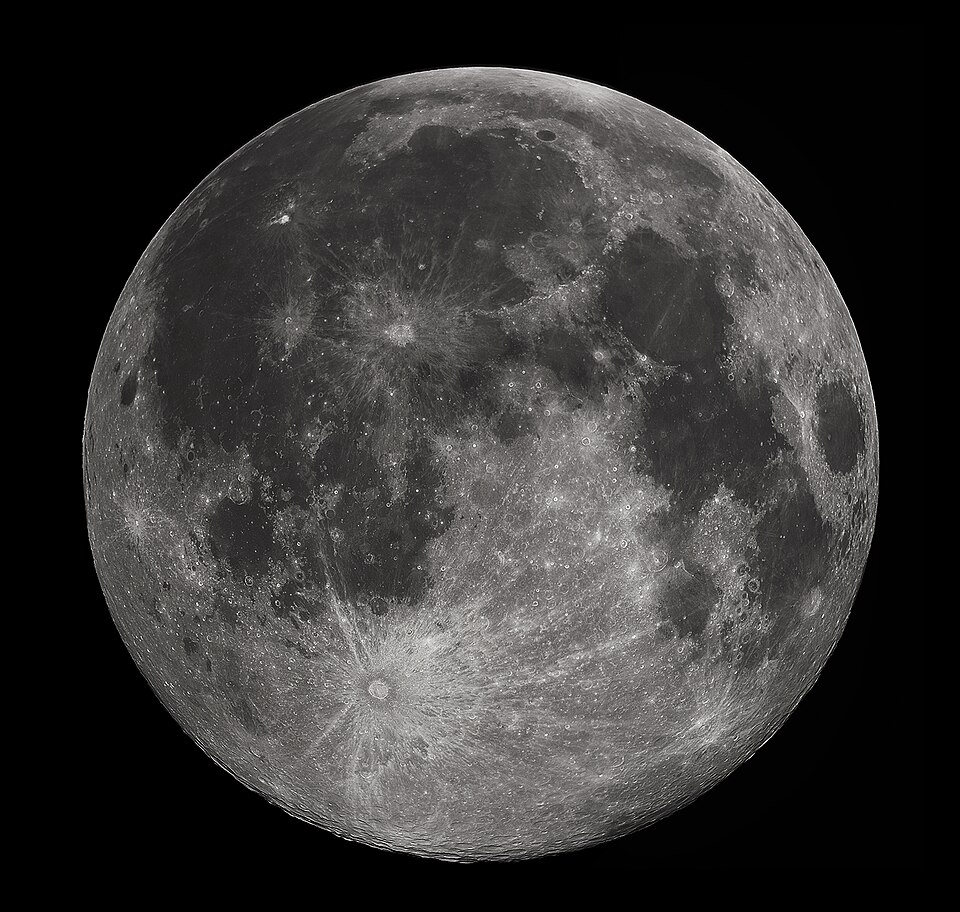
The Moon is a big ball of rock. It is much smaller than Earth. Almost four Moons could fit across Earth. The Moon has no air. Astronauts wear space suits there.
Makes light Bounces light Moonlight is really sunlight
The Moon makes no light of its own. Sunlight hits it and bounces off, like light off a mirror. That bounced light is what we see. The Sun always lights one half of the Moon.
Why the shape seems to change
The Moon travels around Earth. One trip takes about a month. We see more or less of its lit half each night. So its shape seems to change. Press Play and watch.
 Real photo
Names for the Moon shapes
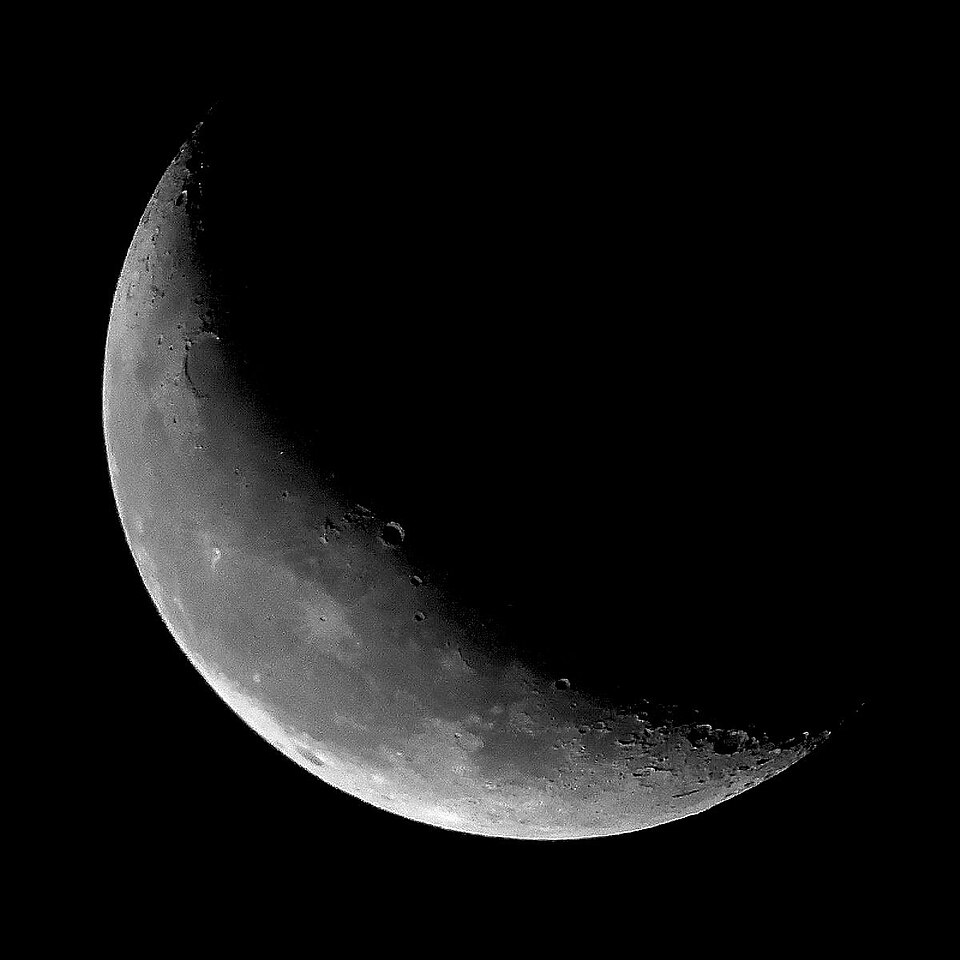
A new moon is very hard to see. Next comes a thin curve, a crescent. Then a half moon, and then a full, round moon. After that, it shrinks back again.
 Real photo
Craters and footprints
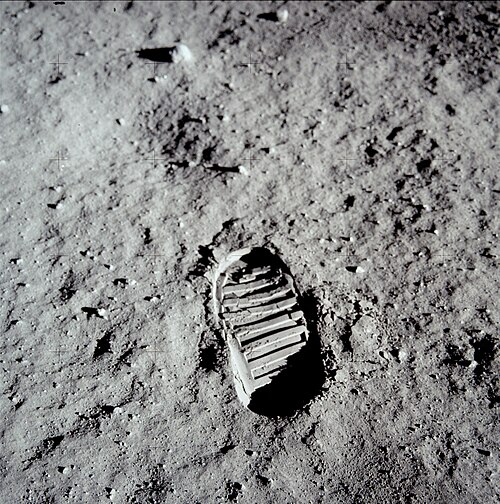
The round holes on the Moon are called craters. Space rocks made them long ago. The Moon has no wind or rain. So astronaut footprints can stay there for a very long time.
For parents
Goal: Your child learns what the Moon is, that it reflects sunlight, and why its shape seems to change.
- Look at the Moon together for a few evenings and draw its shape each night.
- Ask: does the Moon make its own light? Where does the light come from?
- Use the shape names together: new, crescent, half, full.
- If you spot the Moon in the daytime sky, point it out.
Away from the screen: In a dark room, shine a flashlight on a ball while your child walks slowly around it. Watch how much of the lit side they can see.