Hold a magnet near a paper clip. Click! The clip jumps over and sticks. Now try a crayon. Nothing happens. Magnets pull things made of iron or steel.
Iron nailsticksFoildoes not stick
Not every metal sticks
Foil is a metal too, but it does not stick. Foil is made of aluminum. Magnets pull iron and steel. They do not pull every metal.
A pull through the air
A magnet does not need to touch. Its pull reaches through the air. It even works through thin paper. That is how a fridge magnet holds up a drawing.
Two ends called poles
Every magnet has two ends called poles, north and south. The pull is strongest there. North and south pull together. We say they attract. Two same ends push apart. We say they repel. Flip a magnet below.
1Mixed uppins and buttons
2Magnet sweeps
3Sortedpins on the magnet
Try it: sort with a magnet
Steel pins spill on the rug with plastic buttons. Sweep a magnet over the mess. Up jump the pins! The plastic buttons stay behind.
For parents
Goal: Your child learns what magnets pull, that some metals do not stick, and how poles attract and repel.
Before testing an object, ask: do you think it will stick? Why?
Use the words attract and repel together when magnets meet.
Ask: where on the magnet is the pull strongest?
Away from the screen: Take a fridge magnet around the kitchen. Test a spoon, a foil ball, a wooden spoon, a coin and the fridge door, and sort them into sticks and does not stick.
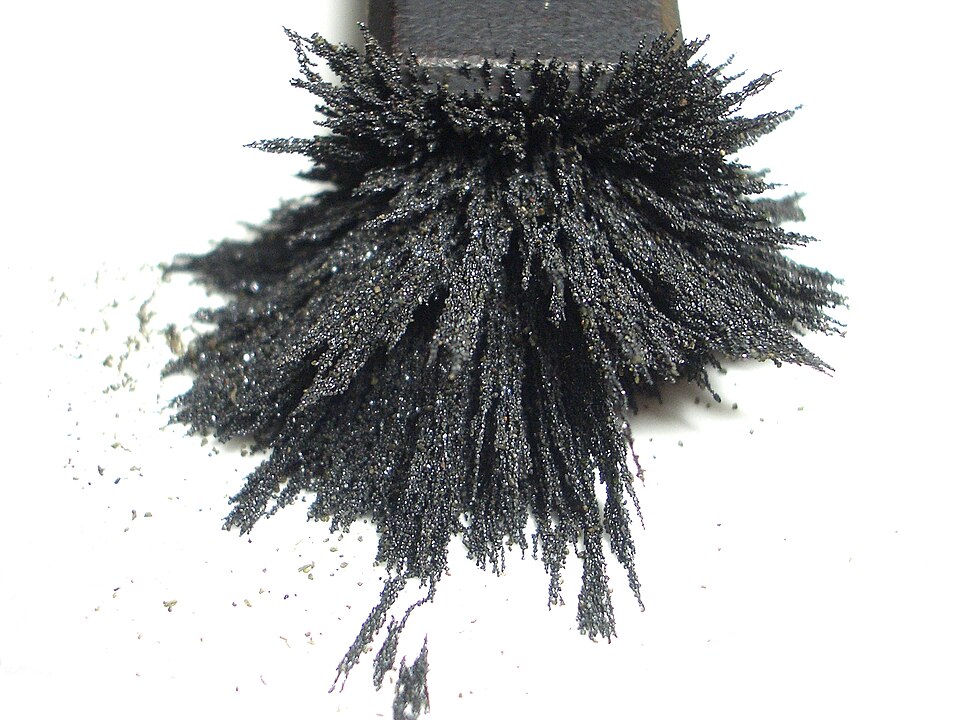 Real photo