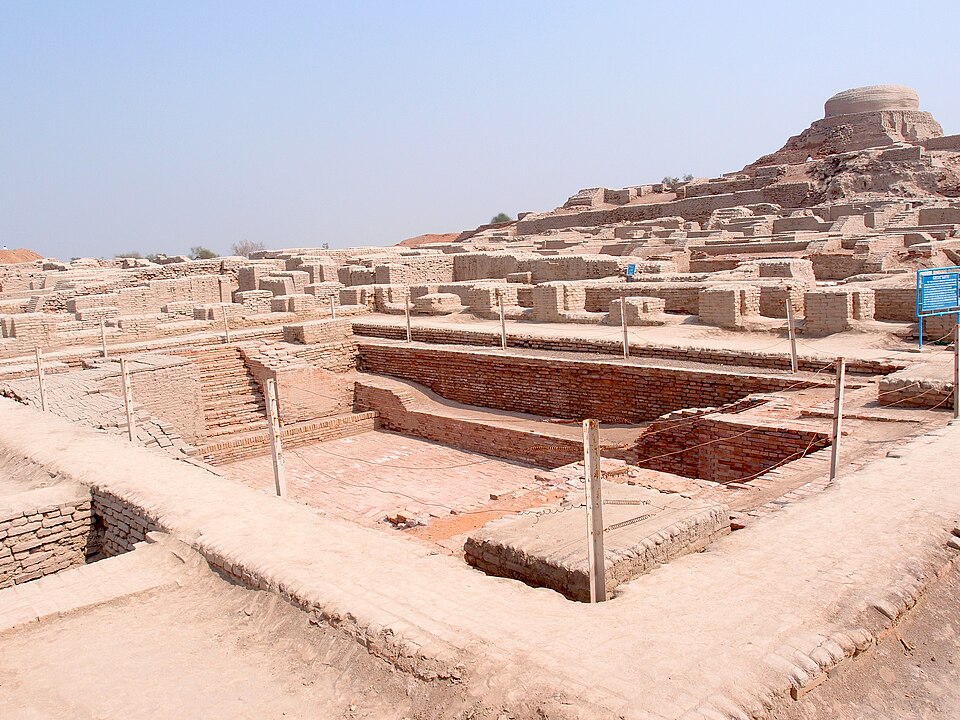
Imagine you walk into a city 4,500 years ago. It is Mohenjo-daro, by the Indus River. Another big city was Harappa. Today this land is in Pakistan and India.
Baked bricksCovered drains
Neat streets and drains
The streets are straight. The houses are made of baked bricks. Covered drains carry dirty water away from homes. Someone planned this city with care.
Real photo
A mystery seal
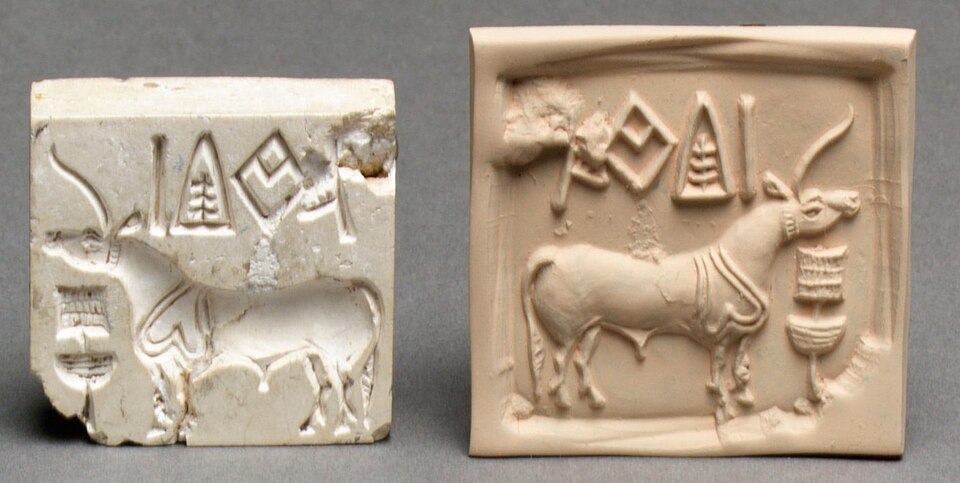
In a shop, you see a small stone seal. It has an animal and some writing on it. No one today can read this writing yet. It is still a mystery.
Real photo
Far away in China
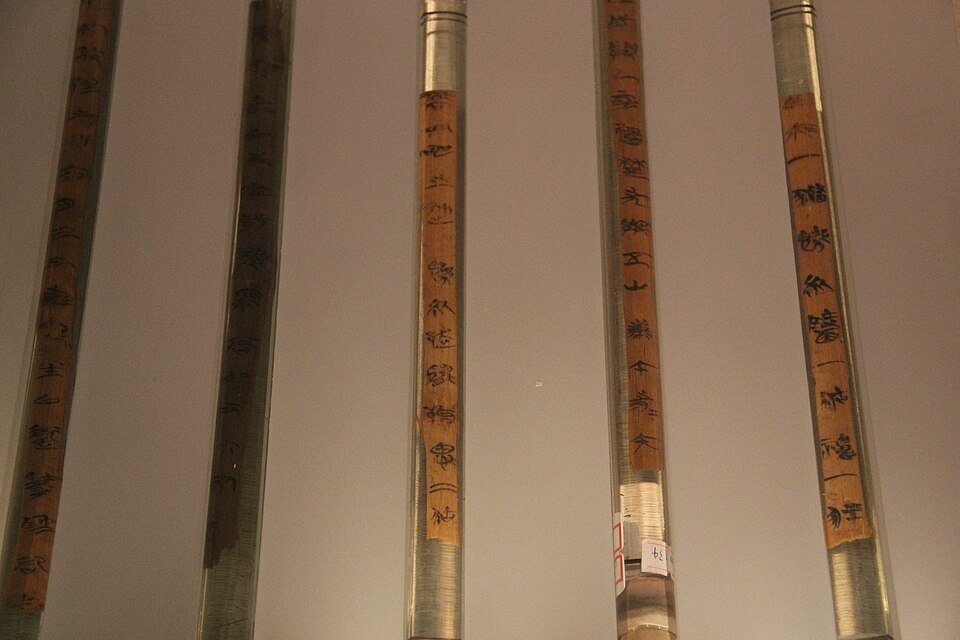
Now travel far to the east, to China. Ancient China grew near the Yellow River. People there wrote on strips of bamboo and on silk. Bamboo was heavy to carry.
1Bark and rags
2Mash in water
3Paperdry thin sheets
4Spread to other lands
Making paper
About 2,000 years ago, people in China made paper. They mashed tree bark and old rags in water. Then they dried it in thin sheets. Paper was light and easy to carry. Later it spread to other lands.
Induscovered drainsChinapaperEgyptpyramids
Rivers helped them all
Egypt, the Indus Valley and China all grew near rivers. Rivers gave water for people and their farms.
For parents
Goal: Your child learns about the planned Indus Valley cities and the invention of paper in China.
Ask: what did the drains do? Why is that helpful in a city?
Hold a sheet of paper and a heavy book. Ask which would be easier to carry on a long trip.
Away from the screen: Find Pakistan, India and China on a globe. Trace the Indus River and the Yellow River with your finger.
 Real photo
 Real photo
 Real photo